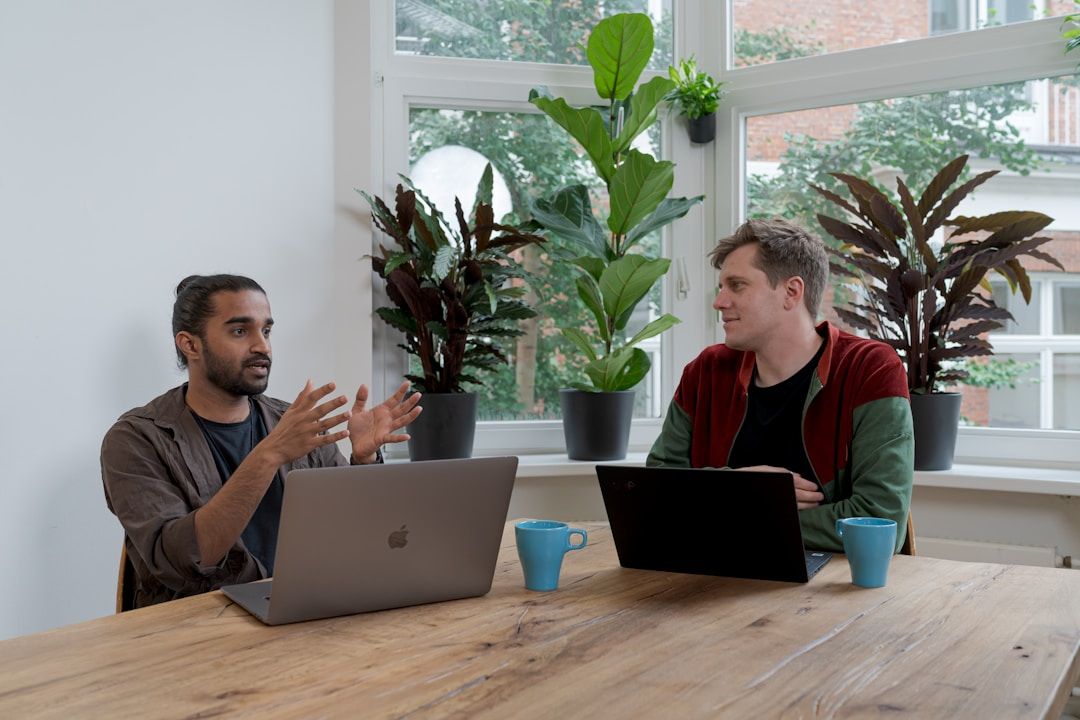
A Psychologist’s Guide to Managing Team Conflict 

As our partnering Psychologist Oliver-Mills Edward points out, conflict in teams is inevitable. When people with different backgrounds, goals, personalities, values, and pressures work together, disagreements will occur. The question is not whether conflict will happen, but how a manager handles it. Handled well, conflict can be a source of innovation, deeper understanding, improved processes, and relational growth. Handled poorly, it can erode trust, create fragmentation, and dysfunction. This is why many organisations now invest in workplace conflict resolution training to help leaders and employees respond with confidence.

While most manager training focuses on technical or operational skills, far less attention is given to psychological and relational capability. Yet these skills — the core of conflict management training for employees — are what determine whether conflict becomes constructive or corrosive. This guide outlines a step-by-step, psychologically grounded framework managers can use whenever conflict emerges, based on research across psychology, organisational behaviour and mediation (De Dreu & Gelfand, 2008).

Key Theoretical Foundations 

Before diving into the ‘how,’ it’s helpful to have a mental model of what’s going on psychologically whenever conflict arises

1. Types of conflict

1

Substantive/task conflict

Disagreement about ideas, strategies, goals, methods.
2

Process conflict

Disagreement about how tasks should be done, who does what, timing, coordination.
3

Interpersonal conflict

Friction, personality clashes, emotional tension. Research suggests that moderate levels of task conflict can improve decision quality, but relationship conflict more often degrades performance and morale (Jehn & Mannix, 2001).
Effective conflict resolution in the workplace training helps leaders distinguish between the three.

2. Conflict styles and response modes 

The Thomas–Kilmann Conflict Mode Instrument (TKI), outlines five modes: competing, collaborating, compromising, avoiding, accommodating (Thomas & Kilmann, 1974). These modes vary on two dimensions: assertiveness (concern for one’s own viewpoint) and cooperativeness (concern for the other’s viewpoint). No one mode is “always best.” The manager has to choose (or help the parties choose) a mode appropriate to the situation.

3. Psychological safety and trust

Conflict resolution works best in an environment of psychological safety where team members feel they can speak up, voice concerns, admit mistakes, without fear of humiliation or retribution (Edmondson, 2018). If safety is low, conflicts often become suppressed, ignored, or escalate emotionally.

4. Emotional dynamics, escalation & meta conflict

Conflicts often escalate not just over the original issue, but over processes of interaction: perceived disrespect, tone, misattributions of intention, identity threats. (For example, “You don’t respect me” becomes part of the conflict). The “difficult conversation” literature suggests that conflicts typically involve three overlapping conversations:
 What happened? — disputes about facts, responsibilities, interpretations
 Feelings — emotional undercurrents that are often unspoken
 Identity — what the issues imply about the participants’ self-worth, competence, values. (Stone, Patton, Heen, 2010)

5. Contingency / situational approach 

Because contexts differ, a conflict management approach must be flexible and adaptive. The best response depends on the stakes, the relationships, time pressure, and whether the conflict recurs (De Dreu & Gelfand, 2008).

With that grounding, here is a recommended pathway for managers

A Step-by-Step Manager’s Pathway to Handling Team Conflict

Below is a structured “playbook” managers can follow when conflict arises (or seems likely). Think of it as a decision tree or procedural flow, rather than a rigid script.

Key actions & pitfalls to avoid 

Phase 0

  • Establish team norms / “conflict charter” (how we will disagree, how decisions will be made).
  • Foster psychological safety (reward voicing concerns).
  • Build relational trust (one-on-one connections, fairness, consistency).
  • Provide brief conflict management training for employees to build team capability
Pitfalls to Avoid: Skipping or underinvesting in this stage makes conflict handling reactive and ad hoc.

Phase 1

  • Monitor/Observe team interactions (tone, body language, avoidance, side conversations).
  • Use periodic “pulse checks” (surveys, one-on-ones) to identify simmering tensions.
  • Pay attention to repeated patterns (e.g. same pairs always clashing)


Pitfalls to Avoid:
Denial, assuming “it will pass,” or conflating conflict with personal failure.

Phase 2

  • Assess severity (low, moderate, high).
  • Diagnose: Is conflict primarily task, process, or relational (or a mix)?
  • Consider urgency and stakes (deadlines, risk, impact).
  • Consider readiness of parties (can they engage constructively?)
  • Decide whether to intervene personally, support parties to self-manage, or bring in third-party mediation/facilitation.


Pitfalls to Avoid:
Intervening too early (before parties involved see the issue) or too late (when damage is done). Jumping to solutions before understanding the nature of conflict.

Phase 3

  • Establish ground rules (respect, listening, no interrupting, confidentiality).
  • Clarify the goal: to understand, repair relationships, find workable resolution.
  • Use a structured conversational protocol (e.g. each party speaks uninterrupted, then reflect, then open discussion).
  • Guide the conversation through the “What happened / Feelings / Identity” layers.
  • Explore interests (not positions): ask “why is this important to you?”
  • Brainstorm options jointly; aim for integrative (win-win) solutions where possible.
  • Negotiate trade-offs if needed (compromise).
  • Decide on concrete actions, responsibilities, and follow-up review.
Pitfalls to Avoid: Letting the conversation drift; failure to manage emotional tone; dominance by one party; “solution fixation” too early.Pitfalls to Avoid: Denial, assuming “it will pass,” or conflating conflict with personal failure.

Phase 4

  • Follow up with check-ins with each party separately and jointly.
  • Monitor whether behaviours change or regress.
  • Reinforce desired behaviours (praise, positive feedback)
  • Be ready to re-open discussion if issues re-emerge.
  • Capture learnings (what worked, what didn’t) to inform future conflicts (Rahim, 2011).
Pitfalls to Avoid: Assuming that “once resolved means done.” Ignoring relational residue. Failing to follow up in a timely way.

Phase 5

  • Use a professionally trained mediator or internal conflict specialist.
  • Possibly involve HR, external consultants, or a neutral “conflict coach.”
  • Use formal mediation protocols (e.g. confidentiality, pre-meetings, private caucuses).
  • If necessary, make structural changes (changing roles, team compositions, reporting lines) (Ury, Brett, & Goldberg, 1988).
Pitfalls to Avoid: Waiting too long to escalate; letting the conflict fester; using punitive or authoritarian fix before facilitation.

Detailed Guidance on key steps and psychological nuances 

Building psychological safety and relational trust

Psychological safety is the foundational soil: without it, people suppress dissent or escalate prematurely (Edmondson, 2018). Managers can model vulnerability (admitting mistakes), explicitly invite feedback, reward people who raise concerns, and respond non-defensively to criticism.
Use a “team charter” at project start: agree together on norms (how to communicate, how to disagree, expected behaviours).
Shadow conflict norms: e.g. “When someone interrupts, we pause and let them finish,” or “We don’t use sarcasm or sarcasm in critique.”
Reinforce relational connection: short check-ins, informal chats, one-on-one time, informal social interaction help maintain relational reserves for when conflict arises.

Early detection and triage

  • Some conflicts are low-stakes and can be left for the parties to resolve themselves. Too much manager intervention can undermine ownership/accountability.
  • But early signs (persistent negativity, gossip, excluding behaviour, tension in meetings) should raise red flags.
  • Use one-on-one conversations with team members (privately) to “sense the water temperature.”
  • The manager must do a quick mental diagnosis: is this mainly about task, process, or interpersonal dynamics (or a combination) (Jehn & Mannix, 2001)? That diagnosis guides your intervention style.

Structured facilitation of the conflict conversation 

  • When bringing parties together, set a neutral and safe tone: “We’re here to understand, not to assign blame.”
  • Frame it as joint inquiry: “I want to understand your perspectives, and help you both move forward.”
  • Use active listening: ask each side to state their perspective; then ask the other to reflect back what they heard (without rebuttal) before responding.
  • Encourage “I-statements” rather than “You always / you never” statements, to reduce blaming and defensive positioning.
  • Surface hidden feelings and assumptions: ask “How did that make you feel?” “What assumptions did you make about their intent?”
  • Uncover underlying interests (why a position matters), which often differ and may allow more integrative solutions.
  • Brainstorm without judgment, then evaluate options. Aim for solutions that respect each side’s key interests.
  • If no fully integrative solution is possible, select a compromise but make it explicit (who gives up what).
  • Formalize the solution: who does what, by when, with concrete behaviours and signals of intention
  • Optionally, have parties “commit in writing” to the solution (even a short email) to enhance accountability.

Monitoring, reinforcement and relational repair

After the meeting, follow up with each party. Check whether they feel that things are shifting.
Observe whether the new behaviours are sustained (e.g. tone in meetings, how disagreements are raised).
If slip-ups occur, gently re-open conversation, not with blame but with curiosity: “I noticed last meeting some tone slipped back; can we talk?”
Reinforce when people “do the right difficult thing” (give feedback, show mutual respect, adhere to norms).
Consider a “retrospective” after some weeks: what’s working, what isn’t, lessons learned.

When to escalate/bring in a neutral third party 

Escalate when:
  • Parties refuse to come together or persistently stonewall.
  • The conflict is deeply emotional or high stakes (risk to team stability, turnover, morale).
  • The manager (or parties) lacks neutrality or emotional capacity.
  • Previous attempts at resolution have failed or made things worse.
Use third-party mediation protocols (pre-meet separately, use caucuses, ensure fairness).
In extreme cases, structural changes may be necessary (changing reporting lines, reassigning roles, altering team composition).

Key psychological principles and tips to keep in mind 

Manage your own emotional state

As manager, your tone, neutrality, and emotional composure matter. If you are anxious, defensive, or seen as biased, you may worsen the conflict. Spend time reflecting, prepping, and possibly debugging your own reactions before stepping into the role of facilitator.

Frame conflict as normal and potentially useful

You will also learn how to put the ideas presented to you into action and build your own personal brand through content marketing.

Be sensitive to power dynamics and identity threats

As manager, your tone, neutrality, and emotional composure matter. If you are anxious, defensive, or seen as biased, you may worsen the conflict. Spend time reflecting, prepping, and possibly debugging your own reactions before stepping into the role of facilitator.

Be flexible in conflict mode

Sometimes you’ll need a more directive style (e.g. in crisis), sometimes a coaching style, sometimes more collaborative. Don’t rigidly stick to “collaborative always.” Use preliminary low-stakes conflicts (e.g. small disagreements) as practice arenas to build group capacity.

Use preventative structural tools

Many conflicts derive from ambiguity in roles, overlapping responsibilities, misaligned incentives, or lack of clarity. Clarify up front, document role boundaries, maintain dashboards of accountability. Use shared objectives to reorient conflicting parties toward a common purpose. The social psychology notion of shared goals helps reduce “us vs them” dynamics by recasting them as one team.

Capture ‘lessons learned’ and build conflict capability: 

After resolving, reflect with the team: what did we learn about how we disagree? How can we do this better next time? Over time, your team can develop its own conflict culture. Consider periodic workshops or role plays to practise conflict handling in low-stakes contexts (simulated conflict). Some systems even use “rehearsal” techniques to simulate conflict scenarios and practice responses (e.g. using interest-rights-power theory) to improve real-life performance

Common mistakes and how to avoid them 

Neglecting follow-up — agreements must be monitored and reinforced.
Ignoring the conflict/hoping it dissipates: this usually lets resentment fester
(imposing solutions without buy-in) — leads to resistance orIntervening too aggressively passive noncompliance.
Favouring the “fast fix” (e.g. compromise) too early, without exploring deeper interests.
Neglecting relational repair — even after agreement, residual distrust or hurt may linger.
Underestimating the emotional component — focusing only on facts or positions, ignoring feelings or identity.
Bias or favouritism — if the manager is perceived to favour one party, trust in the process dissolves.
These pitfalls are why organisations increasingly invest in training on conflict resolution in the workplace — people often don’t know what good conflict navigation looks like until they’ve seen it modelled.

Illustrative Example (hypothetical, simplified)

Scenario

In a marketing team, Alice and Ben are disagreeing. Alice wants to shift focus to digital campaigns; Ben insists more on the traditional channels. Their debates have become tense; other team members are avoiding discussion.

Manager’s Pathway Use

Preparation & early detection

The manager had already established a “conflict charter” governing how disagreements would be aired. She noticed in recent meetings that Alice and Ben were increasingly speaking over each other, and side conversations were happening.

Triage

The manager judges this is primarily a task conflict (marketing strategy), but relationship tension is creeping in (tone, dismissive statements). The stakes are moderate, schedule pressures upcoming. The manager decides to mediate.

Facilitated conversation

  • She gathers Alice and Ben, sets ground rules.
  • She prompts Alice to explain her view (without interruption), then Ben to reflect back. Then vice versa.
  • She asks, “What concerns you about staying with traditional channels?” and “What would worry you if we moved aggressively to digital?”
  • They realise Alice fears losing brand reach and Ben fears losing control of budget discipline.
  • They brainstorm: a phased test campaign, shared metrics, regular review points.
  • They document who is responsible for what, when, and how they will revisit.

Implementation and monitoring

  • The manager checks in with each weekly, asking how the collaboration is going.
  • She reinforces when they reference the agreed metrics, congratulate improvements in tone.
  • After a few weeks, slight tension resurfaces; she calls them back for a short calibration conversation, referencing the original charter and adjustments.

Escalation (if needed)

If the arrangement broke down or one party refused engagement, she would bring in HR or a neutral coach to mediate.

Because the manager had invested earlier in relational trust and a conflict charter, the conflict did not escalate, and the parties co-owned a constructive solution

Key Takeaways for Managers 

Conflict is normal and potentially useful

Framing it as dangerous or taboo makes it worse.

Be proactive

Build norms, psychological safety, clarity, and relational reserves before conflict arrives.

Scan early

Detect tensions when small, before they snowball.

Diagnose with care

Determine whether conflict is over task, process, or relationship (or combination).

Convene structured conversations

. Use facilitation that balances emotional candidness and joint problem solving.

Focus on interests, not positions

Ask “why does this matter?” and look for integrative options.

Follow up, monitor, repair

Conflict resolution is not a one-off event; behaviours must shift and relational fabric must be tended.

Escalate wisely

Use external facilitation or structural interventions when necessary.

Learn and build capacity

Capture lessons, rehearse conflict handling, and gradually build team conflict maturity.

Ready to help your team handle conflict with confidence?

References

Amy Edmondson. (2018)
The fearless organization: Creating psychological safety in the workplace for learning, innovation, and growth. John Wiley & Sons.
De Dreu, C. K. W., & Gelfand, M. J. (Eds.). (2008)
The psychology of conflict and conflict management in organizations. Lawrence Erlbaum Associates.
Deutsch, M. (1973)
The resolution of conflict: Constructive and destructive processes. Yale University Press.
Jehn, K. A., & Mannix, E. A. (2001)
The dynamic nature of conflict: A longitudinal study of intragroup conflict and group performance. Academy of Management Journal, 44(2), 238–251. https://doi.org/10.5465/3069453
Rahim, M. A. (2011)
Managing conflict in organizations (4th ed.). Transaction Publishers.
Stone, D., Patton, B., & Heen, S. (2010)
Difficult conversations: How to discuss what matters most (2nd ed.). Penguin Books.
Thomas, K. W., & Kilmann, R. H. (1974)
Thomas–Kilmann conflict mode instrument. Xicom.
Tjosvold, D. (2008)
The conflict–positive organization: It depends upon us. Journal of Organizational Behavior, 29(1), 19–28. https://doi.org/10.1002/job.473
Tuckman, B. W. (1965)
Developmental sequence in small groups. Psychological Bulletin, 63(6), 384–399. https://doi.org/10.1037/h0022100
Ury, W. L., Brett, J. M., & Goldberg, S. B. (1988)
Getting disputes resolved: Designing systems to cut the costs of conflict. Jossey-Bass.